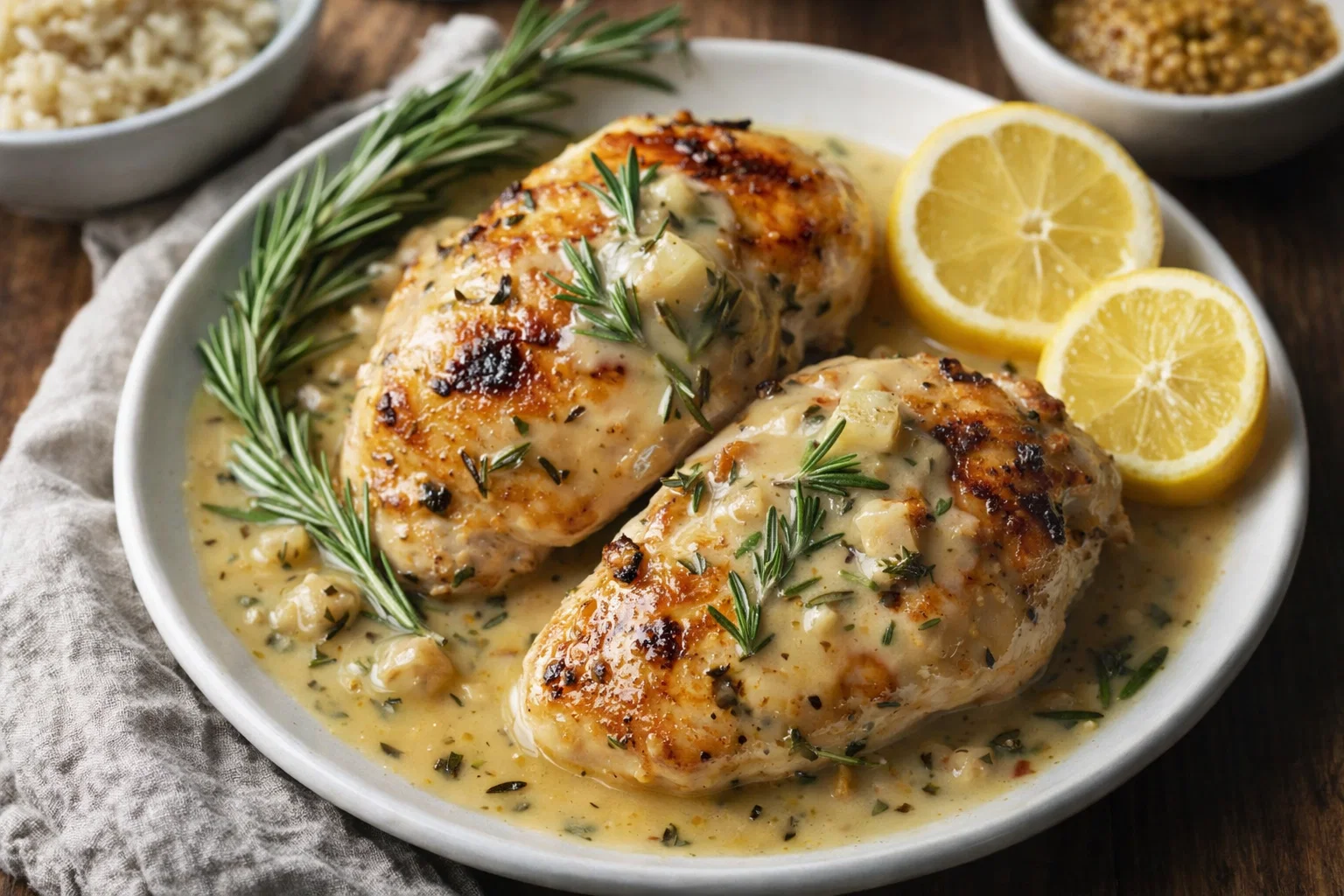
Rosemary Dijon Chicken Simple Herb Chicken Dinner
Rosemary Dijon Chicken – Simple Herb Chicken Dinner: A Tropical Delight
Introduction to Rosemary Dijon Chicken – Simple Herb Chicken Dinner
Are you searching for quick, delicious, and nutritious chicken recipes to liven up your dinner table? Look no further than this mouthwatering Rosemary Dijon Chicken. This dish embodies simplicity with its straightforward preparation, making it perfect for home cooks of all skill levels. Whether you’re a busy parent juggling work and family, a student trying to eat well on a budget, or even a newlywed seeking an easy yet impressive meal for your partner, this recipe fits seamlessly into your culinary repertoire.
What sets Rosemary Dijon Chicken apart is its delightful blend of flavors. Fresh rosemary and tangy Dijon mustard marry beautifully with succulent chicken breasts, resulting in a mouthwatering experience that bursts with aroma. Not only is this dish a feast for the senses, but it also brings along numerous health benefits. Rosemary is recognized for its antioxidant properties and potential to improve digestion, while Dijon mustard offers a strong flavor with fewer calories compared to other condiments.
This recipe is also versatile enough to cater to various dietary needs. You can easily make it gluten-free or adjust its ingredients to suit a low-carb lifestyle. Perfect for any occasion, this Rosemary Dijon Chicken is a win-win for health-conscious individuals as well as those simply looking for a fantastic dish. So, let’s dive deeper into why this recipe is such a stand-out choice among other chicken recipes.
Benefits and Advantages of Rosemary Dijon Chicken – Simple Herb Chicken Dinner
The advantages of preparing Rosemary Dijon Chicken are numerous, making it a staple in the realm of chicken recipes. Here’s why this dish stands out:
-
Ease of Preparation: Busy schedules and meal prep can be challenging, but this recipe shines with its minimal cooking time. You can have a stunning dinner on the table in under 30 minutes, freeing up precious time for activities that matter most to you, from family bonding to unwinding with a good book.
-
Health Benefits: Rosemary is not just a flavor enhancer; it has many health benefits. Among its offerings are improved memory retention and anti-inflammatory properties. Meanwhile, Dijon mustard is a low-calorie option, allowing you to enjoy robust flavors without the added guilt. The chicken itself is a fantastic source of lean protein, making this meal not only satisfying but also nutrition-packed.
-
Versatility and Adaptability: This recipe can easily be adjusted for different dietary needs. Whether you’re cooking for someone gluten-free, low-carb, or dairy-free, you’ll find that Rosemary Dijon Chicken can accommodate these requirements, allowing for a broader audience to enjoy it.
-
Crowd-Pleasing Flavor: With the aromatic blend of mustard and rosemary, this dish is bound to impress your family or guests. It’s a simple yet elegant meal that doesn’t compromise on taste, making it perfect for dinner parties or family gatherings.
-
Budget-Friendly: Utilizing basic and readily available ingredients makes this an inexpensive meal option. You won’t need to break the bank to put together something delicious, nourishing, and visually appealing.
In summary, Rosemary Dijon Chicken not only simplifies weeknight dinners but elevates them. It caters to a variety of dietary preferences while providing numerous health benefits and flavors that please all palates. Now, let’s take a look at the essential ingredients you’ll need to create this delightful dish.
Ingredients Overview
Essential Ingredients for Rosemary Dijon Chicken – Simple Herb Chicken Dinner
To create this savory Rosemary Dijon Chicken, gather the following ingredients:
- 4 boneless, skinless chicken breasts (approximately 1.5 lbs): A lean protein source that will keep you full and energetic.
- 2 tablespoons Dijon mustard: Adds a tangy flavor while also being low-calorie.
- 1 tablespoon olive oil: Healthy fats that support heart health.
- 1 tablespoon fresh rosemary (or 1 teaspoon dried): Known for its aromatic qualities and health benefits.
- 3 cloves garlic, minced: Adds depth of flavor and various health benefits.
- Salt and pepper to taste: Essential seasonings that enhance all the flavors.
- 1/2 cup low-sodium chicken broth: Keeps the chicken moist and flavorful while reducing sodium intake, an excellent choice for health-conscious individuals.
- Optional: Lemon juice or zest for added brightness (especially appealing for summer meals).
This list encapsulates everything you need for a successful Rosemary Dijon Chicken dish. To make it more accessible for all dietary needs, consider these modifications:
Dietary Substitutions to Customize Your Rosemary Dijon Chicken – Simple Herb Chicken Dinner
-
For Vegan Options: Substitute chicken breasts with chickpea patties or tofu. To achieve a similar texture, press and marinate tofu with rosemary and mustard, then grill or bake.
-
Gluten-Free Choices: Ensure that your Dijon mustard and chicken broth are gluten-free. Many brands offer gluten-free alternatives.
-
Low-Carb Variants: You can replace chicken breasts with chicken thighs, which are lower in carbs and offer a richer flavor. Additionally, serve the dish over a bed of sautéed spinach or zucchini noodles instead of rice or pasta.
-
Cooking Method Adaptations: If you prefer grilling or air frying, you can use the same marinade and cook the chicken in the preferred cooking method, adjusting cooking times as necessary.
This versatility sets this dish apart from many other chicken recipes, allowing everyone at your table to find an option that suits them. Now that you have the essential ingredients outlined, we can move on to the step-by-step guide to preparing this scrumptious dish.
How to Prepare the Perfect Rosemary Dijon Chicken – Simple Herb Chicken Dinner: Step-by-Step Guide
Follow these easy steps to whip up your delicious Rosemary Dijon Chicken:
-
Prepare the Base: Start by preheating your oven to 400°F (200°C) if you plan to bake the chicken. Meanwhile, gather and prepare your ingredients. Pat the chicken breasts dry with paper towels and set them aside.
-
Mix Ingredients: In a mixing bowl, combine two tablespoons of Dijon mustard, one tablespoon of olive oil, minced garlic, and finely chopped fresh rosemary. Add salt and pepper to this mixture according to your taste preferences. If you’re using dried rosemary, mix it in the same way.
-
Marinate the Chicken: Place the chicken breasts into a shallow dish or a resealable plastic bag. Pour the marinade over the chicken, ensuring each piece is evenly coated. Ideally, let this sit for at least 30 minutes to absorb the flavors—longer if possible, even overnight in the refrigerator.
-
Prepare for Cooking: If you’re using the oven, heat a large oven-safe skillet over medium-high heat. Add a little olive oil to the pan, then carefully add the marinated chicken breasts. Sear each side for about 3-4 minutes until they achieve a golden-brown crust.
-
Bake the Chicken: Once the chicken is seared, pour half a cup of low-sodium chicken broth around the chicken in the skillet. This helps to keep the chicken moist during cooking. Transfer the skillet to the preheated oven and bake for 20-25 minutes, or until the chicken reaches an internal temperature of 165°F (75°C).
-
Check for Doneness: Use a meat thermometer to check the internal temperature. If the chicken is not quite at 165°F, return it to the oven for an additional 5 minutes before checking again.
-
Rest the Chicken: Once done, remove the skillet from the oven and let the chicken rest for 5 minutes. This allows the juices to redistribute, keeping your chicken moist and tender.
-
Serve: Slice or serve the chicken whole, drizzling some of the pan juices over the top for extra flavor. Pair it with roasted vegetables, a fresh salad, or even whole grains for a complete meal.
-
Customize: To enhance the dish further, consider adding sides that cater to your dietary preferences. Quinoa, brown rice, or a simple citrus salad pair beautifully and keep the meal wholesome and balanced.
Following these steps, you will produce a foolproof Rosemary Dijon Chicken that rivals any fancy restaurant dish. The process is simple enough for students and busy professionals, yet elegant enough for special occasions. Let’s explore some advanced tips and possible variations to make this dish your own.
Mastering Rosemary Dijon Chicken – Simple Herb Chicken Dinner: Advanced Tips and Variations
To really master this dish, consider these advanced tips:
-
Infuse More Flavors: For an added depth of flavor, marinate the chicken with additional herbs like thyme or oregano. Citrus zests, such as lemon or lime, uplift and brighten flavors enormously.
-
Experiment with Cooking Methods: If you’re looking for that crispy exterior, consider grilling the chicken. Brush the marinade onto the breasts and grill for 6-8 minutes per side. This gives a delightful char and adds smoky notes.
-
Play with Accompaniments: Pair your Rosemary Dijon Chicken with various side dishes. Roasted sweet potatoes, sautéed greens, or a creamy mashed cauliflower offer excellent complementary flavors.
-
Add Sauce Variety: A drizzle of balsamic glaze or a light cream sauce can enhance the dish’s profile and add an indulgent twist. Top your chicken before serving to impress your diners.
-
Meal Prep: For busy folks, consider preparing a larger batch of this chicken in advance and storing it in the refrigerator. It reheats wonderfully for easy lunches or quick dinners throughout the week.
By embracing these tips and variations, your Rosemary Dijon Chicken can be customized to suit any palate, making it one of the most adaptable chicken recipes in your collection. Now, let’s delve into the best practices for storing your delicious meals.
How to Store Rosemary Dijon Chicken – Simple Herb Chicken Dinner: Best Practices
Storing your Rosemary Dijon Chicken properly can extend its shelf life and keep it delicious for later enjoyment. Here are some best practices:
-
Refrigeration: To store your cooked chicken, allow it to cool to room temperature before placing it in an airtight container. The chicken can be kept in the refrigerator for up to 4 days. Simply reheat portions in the microwave or on the stovetop for convenient meal options throughout the week.
-
Freezing: If you’d like to extend the shelf life even further, consider freezing the chicken. After cooling, wrap the chicken tightly in plastic wrap or aluminum foil, and place it in a freezer-safe container. Frozen Rosemary Dijon Chicken can last for up to 3 months. To reheat, simply thaw in the refrigerator overnight and then warm in the oven or microwave.
-
Reheating: When reheating, ensure your chicken reaches an internal temperature of 165°F (75°C) to ensure food safety. Moisture can be added by sprinkling a little broth or water over the chicken before reheating and covering it to keep it tender.
Storing and reheating your Rosemary Dijon Chicken correctly not only saves time but also ensures that your meal retains its delicious flavors and textures. This adds another layer of convenience to an already simple and hearty dish. Now, let’s take a closer look at the nutritional value of this delightful recipe.
Nutritional Value of Rosemary Dijon Chicken – Simple Herb Chicken Dinner
Understanding the nutritional breakdown of your meals can help you make informed dietary choices. Here’s the approximate nutritional value per serving (based on a 4-serving recipe):
- Calories: 280 kcal
- Protein: 35 g
- Total Fat: 10 g
- Saturated Fat: 1.5 g
- Cholesterol: 80 mg
- Carbohydrates: 5 g
- Fiber: 0 g
- Sugars: 0 g
- Sodium: 300 mg
This nutritional profile shows that Rosemary Dijon Chicken is a high-protein meal, low in carbohydrates, and fairly moderate in calories. The inclusion of healthy fats from olive oil balances the meal, making it ideal for those looking to maintain a healthy diet, manage weight, or simply fuel their active lifestyles. With its impressive nutritional value, this recipe offers a delicious way to keep your meals wholesome.
FAQs: Frequently Asked Questions About Rosemary Dijon Chicken – Simple Herb Chicken Dinner
Q1: Can I use chicken thighs instead of chicken breasts?
Absolutely! Chicken thighs are juicier than breast meat and will work wonderfully with this recipe. Just ensure to adjust the cooking time slightly as thighs may take a little longer to cook fully.
Q2: Can I prep this dish in advance?
Yes, you can marinate the chicken a day ahead and store it in the refrigerator. When ready to cook, follow the same baking or grilling instructions.
Q3: What can I serve with this chicken?
This dish pairs beautifully with many sides, such as quinoa, roasted vegetables, fresh salads, or even garlic mashed potatoes.
Q4: Is there a substitute for Dijon mustard?
If you don’t have Dijon mustard on hand, yellow mustard may work in a pinch. However, keep in mind that it’s milder and may slightly alter the flavor.
Q5: How can I adjust the recipe for a lower-sodium diet?
Opt for low-sodium chicken broth, and skip adding additional salt, letting the flavors of garlic and mustard shine through.
Q6: Can I make this recipe dairy-free?
Yes! This recipe is naturally dairy-free, so you can enjoy it without any modifications needed.
Q7: What is the best way to check for doneness in chicken?
Using a meat thermometer is the most reliable method. Chicken should reach an internal temperature of 165°F (75°C) to be considered safe for consumption.
In conclusion, Rosemary Dijon Chicken is not just a meal; it’s an experience that brings health, simplicity, and flavor to your kitchen. This dish is engineered for everyone—students, busy parents, health enthusiasts, and culinary adventurers alike. So gather your ingredients, roll up your sleeves, and dive into this versatile recipe that’s sure to become a family favorite. Enjoy every delicious bite!